
Daar is skrywers wie se loopbane ’n literêre geskiedenis weerspieël. En dan is daar skrywers wie se werk ’n mens help verstaan hoe ’n hele samelewing oor tyd verander het.
Marita van der Vyver behoort aan laasgenoemde groep.
Sy is op 6 Mei 1958 in Kaapstad gebore en het haar kinderjare op verskillende plekke in Suid-Afrika deurgebring. Sy het reeds as kind ’n besondere verhouding met woorde ontwikkel. Op twaalfjarige ouderdom is een van haar vroeë verhale op die radio uitgesaai. Later het sy aan die Universiteit Stellenbosch studeer, waar sy onder meer onder die invloed van die digter en akademikus D.J. Opperman gestaan het. Sy het daarna joernalistiek verder studeer en uiteindelik haar pad as joernalis, tydskrifskrywer en voltydse skrywer gevind.
Maar om Marita van der Vyver se loopbaan bloot as ’n lys publikasies en pryse te beskryf, mis die interessante deel.
Want haar verhaal is ook die verhaal van ’n Afrikaanse vrou wat grootgeword het binne ’n baie spesifieke Suid-Afrika — en wat daarna haar taal, identiteit en herinneringe saam met haar oor die grense geneem het.
Van der Vyver het in haar jonger jare as verslaggewer by Die Burger gewerk. Sy het later onder meer as kopieskrywer en tydskrifskrywer gewerk voordat sy in 1987 vryskut geword het en meer ruimte vir haar eie skryfwerk begin skep het.
Haar eerste publikasies was jeugboeke, onder meer Van jou jas, Tien vir ’n vriend en Eenkantkind. Sy het dus nie oornag as volwasse romanskrywer verskyn nie. Haar loopbaan het stadig opgebou uit joernalistiek, jeugliteratuur en die dissipline van eenvoudig aanhou skryf.
Toe verskyn Griet skryf ’n sprokie in 1992 en Afrikaans verander ’n bietjie. Die roman word ’n enorme sukses en ontvang in 1993 die ATKV-Prosaprys, M-Net-prys en Eugène Maraisprys. Dit word daarna in talle tale vertaal.
Maar Griet se belang lê nie alleen in die pryse of verkoopsyfers nie. Dit was ’n roman met ’n vroulike stem wat nie besonder veel moeite gedoen het om haarself te gedra soos wat ’n mens van ’n “ordentlike” Afrikaanse vroulike karakter verwag het nie. Humor, seks, frustrasie, begeerte, alledaagse lewe en die absurditeite van verhoudings is op ’n direkte en dikwels baie snaakse manier deel van die verhaal.
Van der Vyver het gewys dat Afrikaans nie net ’n taal vir die verhewe, die ernstige en die patriargale kon wees nie.
Dit kon ook stout wees en dit kon lag en oor vroue se lewens praat sonder om hulle voortdurend te probeer netjies maak.
Van der Vyver het later Frankryk toe verhuis, waar sy saam met haar Franse man, Alain Claisse, en hul gesin gaan woon het. Dit is ’n belangrike deel van haar verhaal, maar nie omdat sy die eenvoudige cliché van “Afrikaanse skrywer verhuis na die Franse platteland” vergestalt nie.
Inteendeel. Een van die interessante spanninge in Van der Vyver se werk is juis die verhouding tussen hier en daar.
Suid-Afrika en Frankryk. Afrikaans en Frans.
Die plek waar jy gebore is en die plek waar jy later kies om te woon. Die taal waarin jy jou kinders grootmaak en die taal waarin hulle hul wêreld leer ken.
Vir iemand wat in Afrikaans skryf en vir baie jare in Frankryk woon, is taal immers nie bloot ’n kommunikasie-instrument nie. Dit word ’n soort tuiste.
Dit word selfs duideliker in ’n Baie lang brief aan my dogter, wat in 2021 verskyn het. Die boek het begin as ’n brief aan haar Franse dogter, Mia. Van der Vyver het egter besluit dat sy dit in Afrikaans moes skryf — nie omdat Afrikaans die taal van haar dogter se daaglikse lewe is nie, maar omdat dit die taal van haar hart is.
Dit is ’n klein, maar baie betekenisvolle onderskeid. ’n Mens kan jou verstand in verskillende tale gebruik. Maar daar is woorde wat net in jou eerste taal werklik by jou hart uitkom.
’n Baie lang brief aan my dogter is miskien een van die belangrikste sleutels tot Van der Vyver as mens.
Want hier kyk die volwasse vrou terug na die kind wat sy was.
Sy vertel haar Franse dogter van die Suid-Afrika waarin sy grootgeword het: die sestiger- en sewentigerjare, die Afrikaner-middelklas, die Afrikaanse taal, haar kinderdae, haar ontwikkeling as skrywer — maar ook die wêreld van apartheid waarin al hierdie dinge bestaan het. Die uitgewer beskryf dit as ’n jeugmemoires, maar ook as ’n liefdesbrief aan ’n dogter, ’n taal en ’n land.
Van der Vyver probeer nie haar kinderjare herskryf asof sy as kind reeds die politieke insig gehad het wat sy later ontwikkel het nie. Sy doen iets moeiliker. Sy probeer onthou hoe dit gevoel het om onkundig te wees.
In die boek vertel sy onder meer van ’n konfrontasie met Dolly, ’n huishoudelike werker in haar kinderjare. Die jong Marita gebruik die woorde: “Omdat jy ons bediende is!” Sy beskryf later hoe sy nog nooit vantevore — en nooit weer daarna — vir Dolly so sidderend van woede gesien het nie. Die gebeurtenis word ’n belangrike oomblik in haar politieke bewuswording.
Daar is iets waardevols daarin omdat sy bereid is om te sê:
Ek was daar. Ek het so gedink. Ek het nie verstaan nie. Toe het iets gebeur en ek moes anders begin kyk.
Dit is ’n moeiliker vorm van eerlikheid as om voor te gee dat ’n mens nog altyd aan die regte kant van die geskiedenis gestaan het.
Daar is ook ’n interessante ironie in Van der Vyver se lewe.
Sy het grootgeword binne ’n Suid-Afrika waarin ander mense se beweging, taal, identiteit en selfs woonplek deur ras bepaal is.
Later het sy self die ervaring gehad om die vreemdeling te wees. Om in Europa te woon en ’n ander taal en kultuur te betree. Sy verstaan hoe dit voel om nie altyd die persoon te wees wat presies verstaan hoe alles werk nie.
Die akademiese bespreking van ’n Baie lang brief aan my dogter wys juis daarop dat haar Europese ervaring haar ook die ervaring van “die ander” laat beleef het — iets wat haar perspektief op identiteit en behoort verdiep het.
Miskien is dit een van die redes waarom Van der Vyver se werk nie maklik tot ’n eenvoudige politieke etiket gereduseer kan word nie.
Sy is Afrikaans, Suid-Afrikaans, woon in Frankryk, het ’n Franse gesin, maar skryf in Afrikaans.
En sy dra haar eie geskiedenis met haar saam.
Al hierdie dinge kan gelyktydig waar wees.
Dit is ook opvallend dat haar emigrasie nie ’n einde aan haar verhouding met Suid-Afrika beteken het nie.
Suid-Afrika bly ’n voortdurende teenwoordigheid in haar werk: soms as plek, soms as herinnering, soms as taal, soms as skuld, soms as humor en soms bloot as verlange.
Die afstand het haar moontlik selfs in staat gestel om Suid-Afrika anders te sien.
Wanneer jy altyd binne ’n land leef, raak baie van sy vreemdhede normaal. Maar dis eers wanneer jy daarvandaan weggaan, dat jy party van hulle raaksien en daarmee saam ook so iets van jouself leer ken.
Dit sou maklik wees om Van der Vyver vir altyd aan Griet skryf ’n sprokie vas te bind, maar haar oeuvre is veel groter.
Sy het romans, jeugboeke, kinderboeke, kortverhale, rubrieke, essays en ander niefiksie geskryf. Werke soos Die dinge van ’n kind, Griet kom weer, Dis koue kos, skat en talle ander publikasies het haar plek as een van die bekendste Afrikaanse skrywers van haar generasie gevestig.
Die merkwaardige ding is egter nie bloot hoeveel sy geskryf het nie, maar dat sy oor die dekades aanhou verander het.
Die jong skrywer wat met Griet ’n nuwe soort vrouestem in Afrikaans help vestig het, is nie dieselfde mens as die middeljarige vrou wat vanuit Frankryk oor haar Suid-Afrikaanse jeug aan haar dogter skryf nie.
En daardie vrou is weer nie dieselfde as die ouer skrywer wat in haar jongste memoir terugkyk op verlies, reis, vrees en vryheid nie.
In 2025 verskyn My jaar van vrees en vryheid, waarin Van der Vyver en haar man, ná die ontwrigting van Covid-19, hul groot huis op die Franse platteland verkoop en met minder besittings deur drie kontinente begin reis. Die reis word terselfdertyd ’n reis deur haar eie herinneringe en lewensverhaal.
Dit is ’n gepaste latere hoofstuk vir iemand wie se lewe soveel met beweging te doen gehad het. Van die kind wat stories skryf, na die jong joernalis. Van die skrywer wat ’n Afrikaanse literêre wêreld opskud, na die vrou wat Frankryk toe verhuis.
Na die moeder wat haar verlede aan haar Franse dogter probeer verduidelik. En uiteindelik na die ouer mens wat besef dat vryheid nie noodwendig beteken dat jy niks verloor nie.
Soms moet ’n mens juis bereid wees om iets te verloor voordat jy verstaan wat vryheid beteken.
Daar is dalk een draad wat deur al hierdie fases loop: Afrikaans.
Nie Afrikaans as politieke vaandel nie of Afrikaans as eksklusiewe identiteit nie, maar Afrikaans as taal waarin ’n mens kan onthou, liefhê, lag, skuldig voel, kwaad word, grootword en vir jou kind probeer verduidelik wie jy was.
Dit is betekenisvol dat Van der Vyver, wat al dekades lank in Frankryk woon en in ’n meertalige wêreld leef, steeds terugkeer na Afrikaans wanneer sy die mees persoonlike dinge wil sê.
Die taal het saam met haar gereis.
En dalk is dit die mooiste manier waarop ’n taal kan oorleef: nie omdat mense dit met vuiste verdedig nie, maar omdat mense dit gebruik om iets mensliks te sê: ’n Liefdesbrief, ’n grap, ’n roman, ’n herinnering, ’n erkenning van skuld, ’n storie vir ’n dogter, ’n boek oor vrees, ’n boek oor vryheid.
Marita van der Vyver se betekenis vir Afrikaans lê daarom nie slegs daarin dat sy baie boeke geskryf het of belangrike pryse gewen het nie. Dit lê daarin dat sy gewys het dat ’n taal nie staties hoef te wees om getrou aan homself te bly nie.
Sy het gewys dat ’n mens Afrikaans kan saamneem na Frankryk sonder om dit minder Afrikaans te maak. Dat ’n mens jou verlede kan erken sonder om jou hele identiteit daarvoor prys te gee en selfs oor Suid-Afrika kan praat terwyl jy duisende kilometers daarvandaan woon.
En dat ’n mens, selfs wanneer jy terugkyk na ’n wêreld wat jy as kind nie volledig verstaan het nie, nog steeds die moed kan hê om te sê:
Dit was my wêreld. Ek was deel daarvan. Ek het dit nie altyd verstaan nie. Maar ek het aangehou leer.
Miskien is dit uiteindelik wat ’n goeie skrywer doen.
Nie om vir ons te vertel wat om te dink nie, maar om ons ’n bietjie beter te laat kyk, en dan self te besluit wat ons sien.


We cooked three jars of jam from green tomatoes growing in a strip of soil in our new courtyard. This is an astonishing first for us. Not so much the cooking of jam; my Frenchman and resident chef used to do a lot of that when we lived in a big house with an even bigger garden where we planted a variety of fruit trees. And we foraged from wild trees growing in the fields and woods around us, plums and peaches, figs and mulberries, and hedges of thorny blackberries.
But we never had any luck with vegetables. Not for lack of trying. Year after year we would try to grow tomatoes, beans, radishes, salads, carrots and other stuff in raised vegetable beds. The raised beds were a futile attempt to protect the young plants from snails and insects, which would devour our meagre harvest in a single night. Year after year.
We tried every ecologically-friendly trick in the book to keep our edible flora safe from the ravenous fauna – to no avail. We should probably have been thankful that the fauna didn´t include rabbits or other four-legged creatures, but the snails were enough to drive us to ungrateful despair. We would surround the vegetable beds with crushed egg shells that would (in theory) make it impossible for the snails to reach the tender young leaves. Or we would attempt to inebriate the snails with beer (or drown them in the beer, whichever happened first) but the snails always outnumbered our efforts. They just kept coming until the vegetable patch was stripped as bare as the Sahara desert.
And talking of deserts, whatever bit of greenery that was spared by the snails and the insects would be destroyed by regular droughts and water restrictions. We simply didn´t have enough energy to keep fighting this losing battle, so we hoisted the white flag, abandoned the vegetable patch and gave all our attention to the trees. They needed very little attention, thank heavens. They generously gifted us with small green apples, sweet purple figs, bright red cherries, almonds and olives.
By the time we moved to a much smaller house in another region, and converted the ruin attached to the house into a courtyard for outside eating, we had given up all hope of ever growing vegetables. Or planting trees, for that matter. We designed four long, shallow plant beds next to the ancient stone walls, far too shallow to plant trees, simply to grow some colourful flowers and shrubs to soften the starkness of the stone courtyard.
But the building project lasted much longer than we´d hoped, as building projects invariably do, and was completed not by Christmas as promised by the builders, not in early spring (another broken promise) or late spring (ditto) or even early summer (by which time we didn´t believe any promises anymore). When we could finally start using our courtyard, it was already high summer, with record-breaking temperatures - too late for most of the flowers we´d been hoping to plant. We hastily improvised with some drought-resistant shrubs in three of the long plant beds, while keeping one empty until autumn when we could plant bulbs that would flower next year.
Well, that was the plan. But once again life happened, haphazardly, around our careful plans. At some stage, while preparing a meal outside, we must have tossed some leftover vegetable pips on this strip of rich soil, because by the end of summer we had a forest of green leaves in that corner of the courtyard. On closer inspection this turned out to be the leaves of tomatoes and courgettes (or maybe cucumbers) and peppers, green or red, we don´t know because it was too late in the season for these vegetables to grow. Only the tomatoes were growing, in profusion, with small green tomatoes playing hide and seek among the leaves spread out over the concrete floor of our courtyard.
Whenever I hung washing on the retractable washing line between two stone walls, I would step on tiny tomatoes. (One of the many joys of the courtyard is that I can hang washing outside again, after almost two years of draping damp clothes and huge sheets all over the house.) By now there is barely enough sunlight left to dry the washing in a single day, though, and definitely not enough to ripen the tomatoes. We had to accept that they wouldn´t become red and plump and juicy, but we thought of that old saying about making lemonade when life gives you lemons.
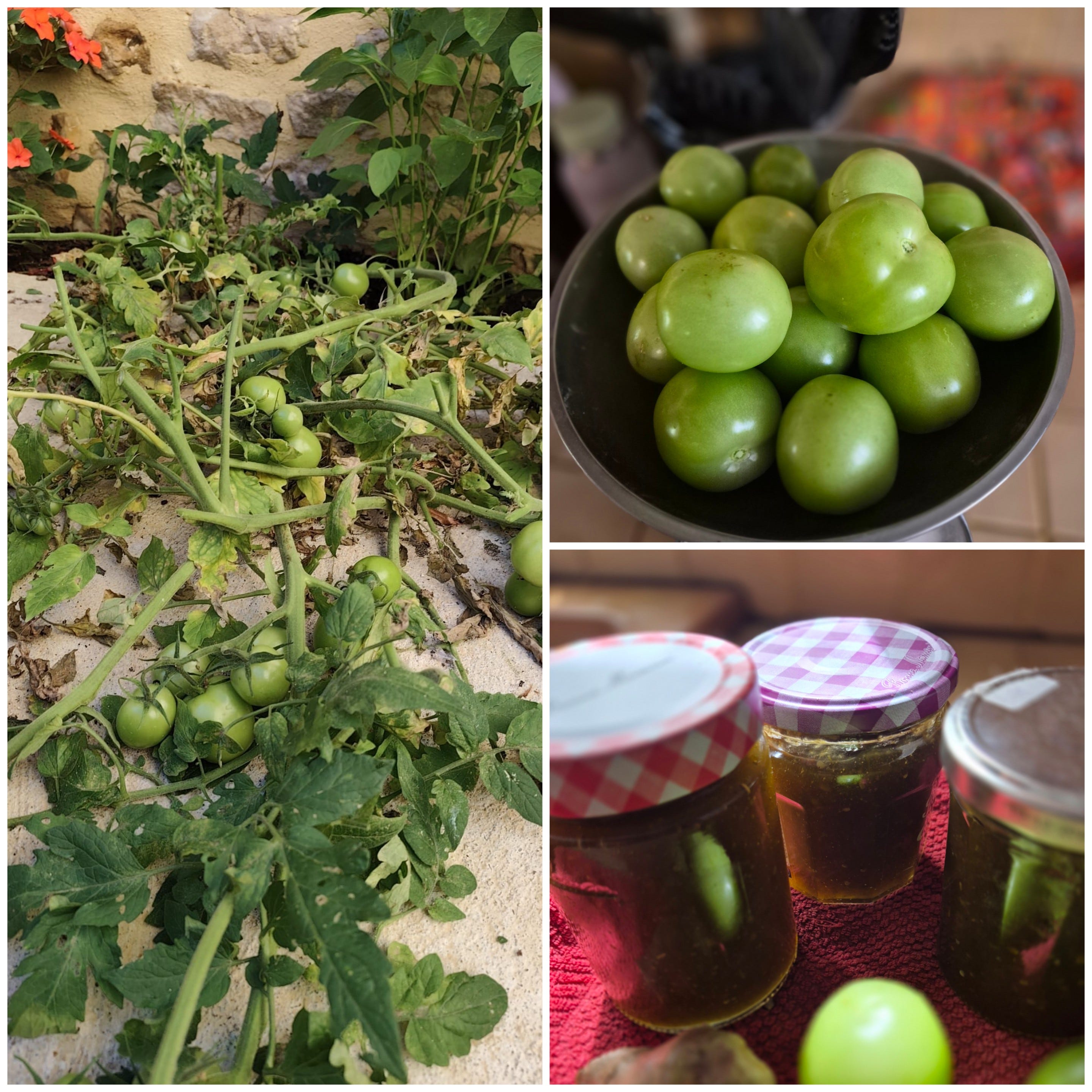
Here life was giving us green tomatoes, completely unasked for, and we had to do something with them. I would probably have attempted that mythical southern American dish of fried green tomatoes, which I´d dreamed of ever since I saw the movie Fried Green Tomatoes decades ago. But meanwhile, during a road trip through the American south, I´d tasted this dish in Memphis, Tennessee. In a bar on the famous Beale Street, not far from the equally famous wide-legged statue of Elvis, I was delighted to spot it on a menu.
And what a disappointment it turned out to be.
In My Year of Fear and Freedom I wrote: Maybe I expected too much, maybe I´m just not a big enough fan of food that´s been fried in oil, but the blanket of flour and crumbs that coats the tomatoes is much too thick for my taste. I end up peeling it off and only eating the green tomatoes.
It´s probably as senseless as buying a pie and only eating the filling. But to each their own, and the oily dishes of the southern American states just don´t do it for me. The further south we travel and the more oily dishes I try – because I remain curious enough to want to try everything – the more I am convinced of this.
I suppose I could have tried to fry my own green tomatoes in a thinner coat of crumbs. But I was too scared of being disappointed again. I preferred to cling to my naïve idea of a mysterious dish that was also the title of a feel-good movie. And since I´d tasted green-tomato jam before, and remembered liking it, I decided to rather stick to the devil I knew. So the Frenchman cooked jam, adding a spicy kick of ginger because he believes that absolutely everything tastes better with ginger, and we felt ridiculously proud when we tasted the jam produced from our very own tomatoes in our very own courtyard.
After all those years of unsuccessfully trying to grow tomatoes in a huge garden, we now have tomatoes growing wild in an untended strip of soil in what used to be the ruins of a house until very recently. The moral of the story probably has something to do with trying too hard, but I´m still figuring it out. Sometimes, it seems, you simply have to let nature run its course.
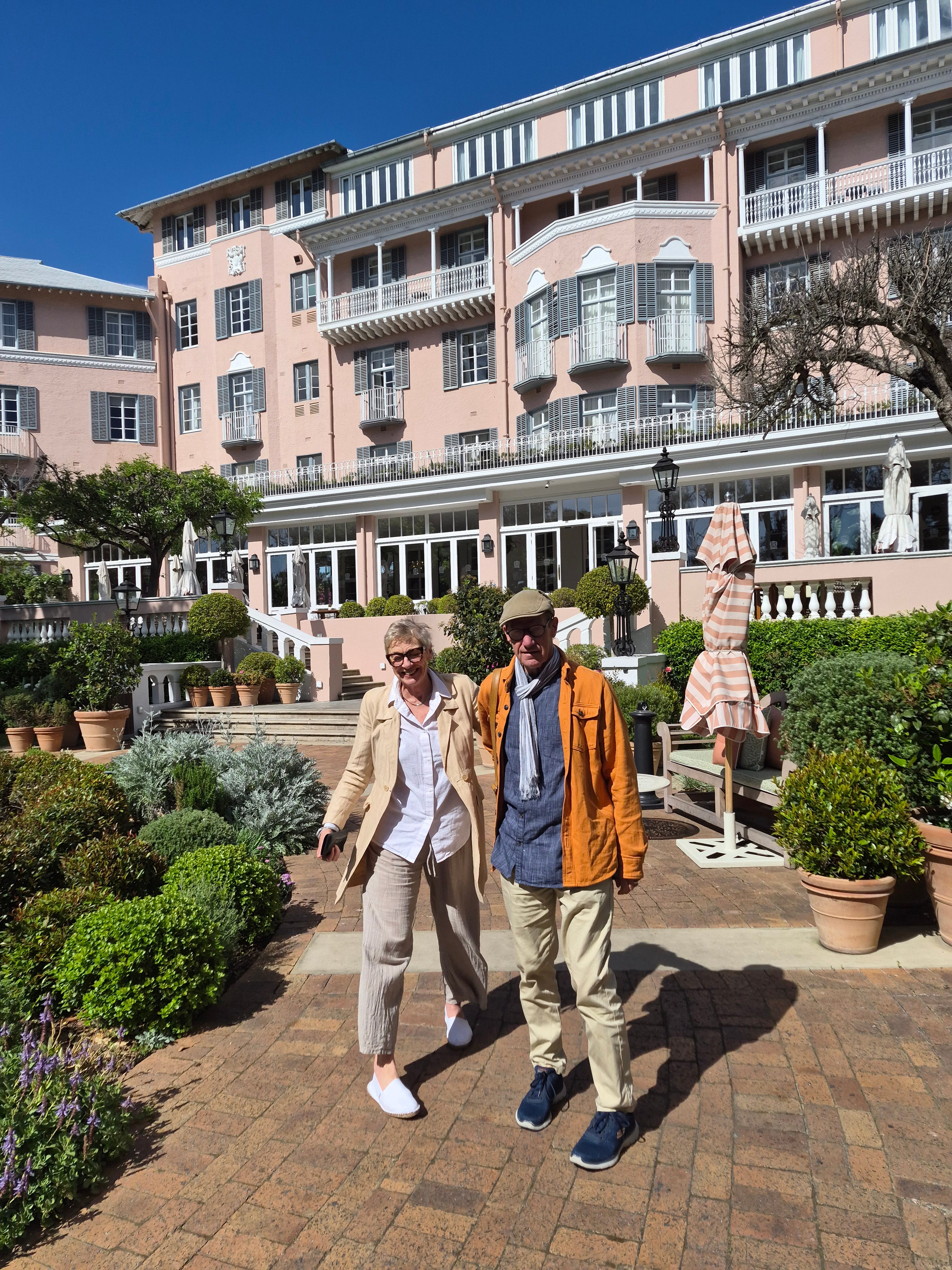
Breakfast of the week: This might actually be my breakfast of the year - or even the best breakfast I´ve ever had in my life. It happened last week in the venerable Mount Nelson Hotel in Cape Town, not a joint I can afford to hang out in regularly, but the Afrikaans version of My Year of Fear and Freedom was shortlisted for a major non-fiction award and the prize-giving event was held at The Nellie and the shortlisted candidates plus their partners were offered a night in this posh pink hotel that is often listed among the great hotels of the world. With the fabulous breakfast included.
Niksgewoond, meaning `not used to anything´, is a word my mother could use like a weapon. Ag nee, moenie so niksgewoond wees nie, she would say when you wanted to wear a new dress as soon as it was bought instead of waiting for the special occassion it was bought for. I´d like to believe I´m not niksgewoond when it comes to accommodation. I´m often invited to book festivals and literary events, and my publishers or the organisers usually put me up in excellent hotels or luxurious guest houses.
But the Mount Nelson is in a league of its own, more a monument than a mere hotel, its guest list over the past century including presidents and politicians, world-renowned authors like Agatha Christie and rock stars like John Lennon. Imagine, as a fellow writer said during the prize-giving ceremony, you might be sleeping in the same room Lennon had slept in.
So I was niksgewoond enough to overcome my embarrassment and pose for a picture in front of The Pink Lady, the colonial building looking considerably more stately than me and my amused partner.
Spoiler alert: I did not win the prize, but I still loved the breakfast. I mean, starting a Sunday morning with fresh oysters and sparkling wine, what´s not to like? And good, strong, freshly brewed coffee, and croissants as crispy and buttery as any I´d ever tasted in France, and many other irresistible pastries and breads, and a whole counter full of beautiful fruits and cereals and nuts and seeds as a healthy option. (I had some of those too, just to soothe my conscience before the decadence of slurping oysters and licking pistachio cream from a pastry.) And a mouth-watering selection of cheeses, and charcuterie, and, and, and. Oh, there were countless other delights, but I turned my head away. A woman can only eat so much for breakfast, even if she spreads the meal out over two hours.
Niksgewoond, neh!
I did, however, order the Eggs Benedictine from the menu of warm dishes. It´s a classic that I love but rarely make at home because I can´t poach eggs decently and I´m too lazy to stir up that tricky sauce hollandaise - and The Nellie´s version was perfection on a plate. Do you remember that old proverb about eating breakfast like a king, lunch like a prince and dinner like a pauper? After this royal breakfast that lasted almost until lunch, I was content to spend the rest of the day as a pauper.
Sounds of the week: Certain sounds are such an integral part of certain cities that you can´t imagine one without the other. The peeling bells of the Notre Dame Cathedral in Paris, Big Ben striking the hour in London, the Mouille Point fog horn moaning on misty mornings and the blast of the Signal Hill canon at noon in Cape Town. Last week I spent a few chilly days close to the Mouille Point lighthouse and listened to the lament of the fog horn with a deep sense of belonging. And one bright day in a house on the slopes of Table Mountain I heard the boom of the canon shattering the silence with such force that I felt as if I was standing right next to it. Followed by the fluttering of pigeons settling down again, as they´ve been doing every day at noon for as long as I can remember, and will hopefully continue doing long after I´m gone.
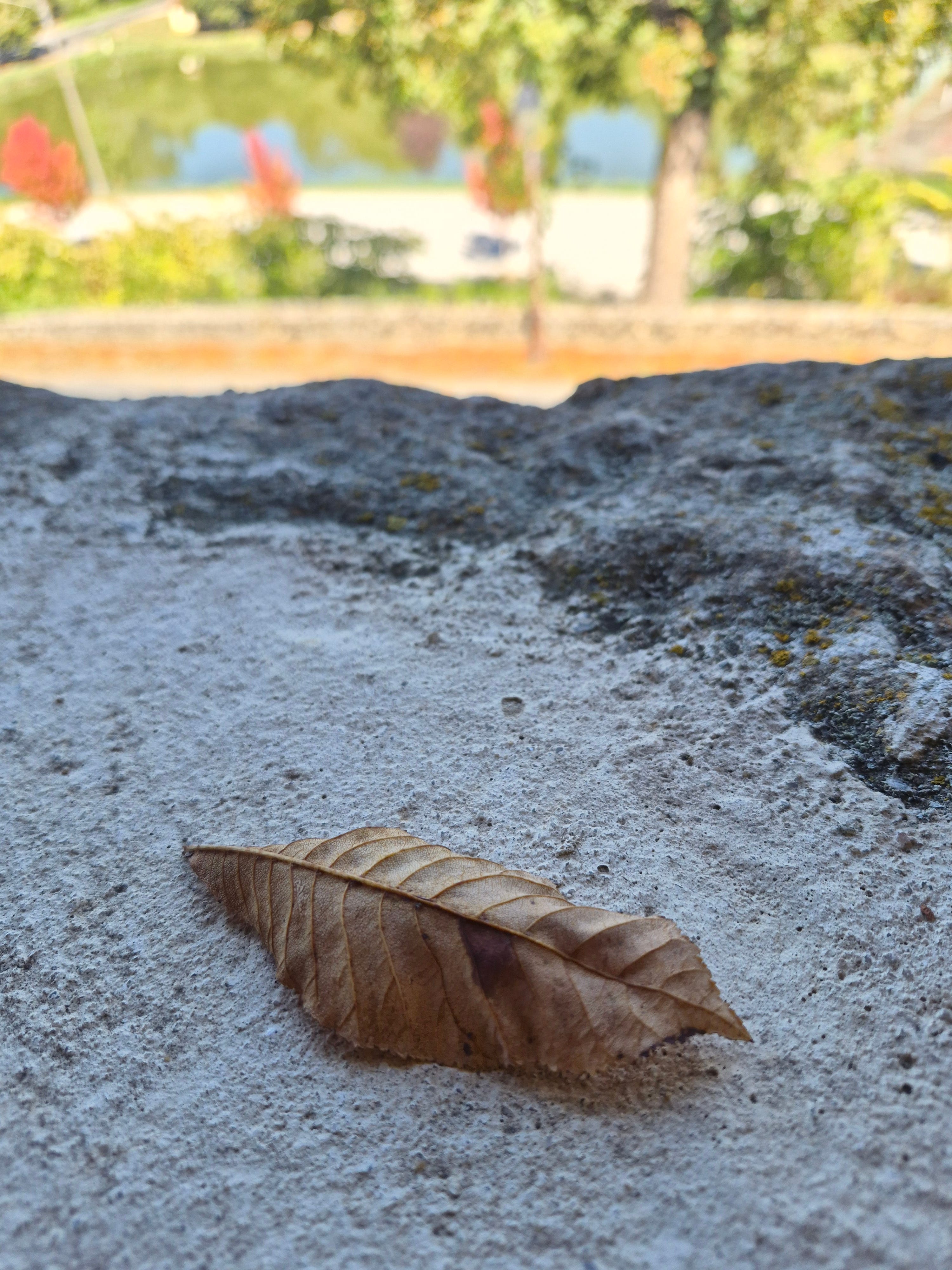
Sight of the week: Back in France I was surprised by a single brown leaf on the wide window sill next to my bed, looking like a little upturned boat on a deserted beach at low tide. It was a warning that the seasons are turning, like the tides, that autumn is rolling in like a wave, and soon it will be cold and dark on this beach.

In this summer of our discontent, we desperately needed a natural phenomenon that had nothing to do with climate breakdown or politics. Enter a total eclipse of the sun, visible from Iceland to Spain, to get millions of Western Europeans wildly excited. It gave us a chance to stare at the sky in childlike wonder, wearing ridiculous dark glasses with special eclipse-protection lenses – or looking at the sun through pasta strainers and slotted spoons and cereal boxes.
In France it was the first total eclipse in almost 30 years, and the next one is expected in more than 60 years when most of us would be long gone, so understandably it was the main topic on social media and in old-fashioned news media. In the southwestern part of the country where the sun was obscured almost entirely, around 97% in my neck of the woods, the excitement reached fever pitch.
And what a spectacular pas de deux the sun and moon gave us, like a beautiful ballet after too many weeks of watching a horror show. We’re officially in our fifth heat wave, if anyone is still counting, we’re threatened with drought and severe water restrictions, and new wildfires are still springing up around us. I’ve been scanning the sky for signs of rain as anxiously (and as eternally hopeful) as I remember my farm uncles in South Africa doing decades ago.
No wonder those indispensable protective glasses were completely sold out in the days leading up to the eclipse. By the time I started searching for a pair, it was too late even to order them by mail. So we had to resort to System D, the French version of what I’ve always known as ’n boer maak ’n plan, with D standing for débrouille, for finding a way around a problem. Although nowadays it should probably be called System G, as in G for Google, because that’s how we solve most of our minor practical problems.
In this case Google showed us how to transform an ordinary cereal box into an object with which we could watch the eclipse. But it involved standing with your back to the sun and looking at a small reflection of the eclipse inside the box, and going to so much trouble for such a tiny image seemed like setting yourself up for disappointment. If you were doomed to see only a miniscule reflected sun, then wouldn’t it be better to see lots and lots of little suns? A miracle of multiplication that could be achieved with a few ordinary kitchen utensils, our friend Google assured us.
This is how it came to pass that three of us, me and the Frenchman and our eldest son, joined about a dozen other enthusiasts watching the eclipse on our village green. (Or what is supposed to be a village green, but due to the drought it is more like a village brown, a sad patch of dry grass.) We were the only ones armed with pasta strainers and a slotted spoon, all the others were equipped with disposable eclipse glasses which they’d been wise enough to buy when you could still buy them.
It somehow reminded me of the biblical parable of the Ten Virgins waiting with their lamps for a delayed bridegroom. Five have the foresight to bring extra oil for the lamps, while five foolish ones run out of oil and have to go search for more and arrive too late to enter the wedding feast. We were the three foolish ones, fortunately not barred from the feast of the total eclipse, but not nearly as prepared as we should have been for such a major event. And we certainly felt foolish as we tried to watch the eclipse reflected through the many holes of our kitchen colanders – while we in turn were watched by our bemused fellow watchers.
If the total eclipse could be described as a massive spectator event, we provided the halftime entertainment, like Madonna and company at the recent finals of the Fifa World Cup. Not quite on the same professional level, though. I felt more like a bumbling clown bringing a little comic relief to a classy circus act. Everyone was looking up to admire the high-wire dance of the sun and the moon while we fumbled around with our colanders reflecting the slow dance on a tray balanced against a tree. (Oh yes, that was another piece of kitchen equipment we brought along: the white tray to provide the background for the reflections.) Necessity is indeed the mother of invention.

Picture: Marita van der Vyver

Picture: Marita van der Vyver
But we also brought a cool bag with drinks and snacks, and we were early enough to claim the only picnic table on the village brown (to make up for our tardiness in procuring protective glasses), so we were actually having a fine time. And since we were the comic team we couldn’t help fooling around, posing for snaps with pasta strainers on our heads, carrying the slotted spoon like a spear; foolish knights fighting for the right to see the total eclipse along with everyone else.
It was only when a friend saw these pics and reminded me of the Church of the Flying Spaghetti Monster that I found the perfect excuse for our silliness. This parodic religious movement originated about 20 years ago in opposition to the teaching of “intelligent design” in public schools in the US. A satirist named Bobby Henderson wrote an open letter to the Kansas State Board of Education to protest the teaching of intelligent design as an alternative to evolution in science classes, demanding equal time in science classrooms for Flying Spaghetti Monsterism alongside intelligent design and evolution. The Flying Spaghetti Monster became an internet phenomenon, with adherents calling themselves Pastafarians and claiming the right to pose for official ID photos with pasta strainers on their heads.
They even have a satiric calendar of Holy Days. Did you know that the day of the total eclipse, 12 August 2026, was Vegetable Sauce Day? I didn’t either. But now I know that Saturday 15 August was Condom Day and Sunday 16 August, when I’m hoping to post this Substack, is Wave At The Surveillance Cameras Day.
(Un)fortunately we don’t have any surveillance cameras in my village, but if you pass one wherever you live, please make my day by sending me a picture of you or someone you know waving at it. This could even earn you honorary membership of the Church of the Flying Spaghetti Monster. And if you miss Wave At The Surveillance Cameras Day, there is still Kiss Someone Day (Wednesday 19 August), Apologise Day (Friday 21 August) and Tarantula Teasing Day (Saturday 22 August) coming up before the end of the week.
But jokes aside, the eclipse was awe-inspiring. The late-afternoon sky acquired an ominous bruised colour, as if a massive storm was brewing, the birds and the insects grew quiet, and with the help of our colanders we could see not just one sun but dozens of shiny little suns being eclipsed until only the thinnest slivers of light remained. A truly dazzling show proudly presented by Mother Nature.
Sight of the week: Not the eclipse, which we could only see in reflected form, but the Perseid meteor shower which is always visible around this time of the year. (I sometimes forget the French name and call it the Persillade, as in the condiment of snipped parsley, to the amusement of my Frenchman.) When our children were small we turned this heavenly spectacle into a night-time adventure, taking blankets and pillows and snacks to an open space with a wide view of the sky, lying on our backs and counting shooting stars. This year we had two of our adult children with us, and although the son was too lazy to stay up until all the village lights went out half an hour after midnight, the daughter insisted on honouring the family tradition. So there we were, at one o’clock on a cloudless, moonless night, peak conditions for star gazing, spread out on a blanket next to the village pond, thrilled each time we spotted the shiny tail of a meteor writing a secret message against the pitch-black sky.
We couldn’t decipher the messages, but you don’t have to understand something like that in a rational way to feel your heart lift in indescribable joy. Simply more proof that Mother Nature remains the most impressive impresario in show business.

Pictures: Marita van der Vyver
Sound of the week: Two days after the concert of the total eclipse and one day after the night of the shooting stars, we participated in a more down-to-earth celebration. It was our village’s Fête Votive, the annual festival with collective dining and dancing and merrymaking on the market square. We didn’t want to go dance to the beat of bad French pop music (yes, we’re snobs when it comes to pop music), we simply wanted to have a drink on the square and watch the merrymakers. And then we got caught up in the karaoke.
The karaoke was only supposed to entertain the diners until the dancing started, but it was such an unexpected hit that everybody forgot about dancing. And I can proudly state that my family did our best to help the karaoke along. Not me, I’m a coward when it comes to public singing, but our daughter and son were brave enough to open the floor. Then the father and son sang a duet, after which lots of people joined in. Therefore my sound of the week was my husband and his son singing Talking Heads’ Heaven is a place (one of only two English songs heard all evening), which has become our family’s unofficial theme song years ago. Heaven is a place where nothing ever happens. Indeed.
Except in our patch of heaven we had a Pastafarian experience of an almost total eclipse, a night of shooting stars, and a lot of joyous outdoor singing, all in one week. Not bad for a village where everything is supposed to stay the same forever.
Plan for the week: I’m packing winter clothes (what a pleasure!) for almost a month of book-related travel in SA. I might not be able to write on Substack as regularly as I would like to during this time, but I’ll try to post an update for paid subscribers, at least, because I don’t want anyone supporting my writing financially to feel left out. And I’ll hopefully be bringing some good news next time. Please keep your fingers crossed with me. DM
Republished from Marita van der Vyver’s Substack. Read more of her Substack pieces here.


Kontak Marita van der Vyver direk. Jou boodskap sal per e-pos gestuur word.


